Home Roasting with the KAKACOO KAKA-G400: First & Second Crack
A hands-on home-roasting log with the KAKACOO KAKA-G400 coffee roaster, using Tanzanian and Kenyan beans. I share my process, first and second crack, roast levels, and honest pros and cons.
Table of Contents
Disclosure: This article may contain affiliate links. If you buy through these links, I may earn a small commission at no extra cost to you.
“So it really does make a crackling sound.”
That’s what I thought the first time I heard first crack.
One of the joys of roasting your own coffee is the cost. Green (unroasted) beans are usually cheaper than roasted beans, so once you roast regularly, home roasting can help lower the cost per cup — even though the roaster itself is an upfront investment.
In this article, I share how I actually used the KAKACOO KAKA-G400 coffee roaster, a glass-drum roaster for home roasting. I roasted Tanzania Ngorongoro AA and Kenya Red Mountain, finishing them somewhere between City and Full City roast as a gift for my parents. If you’re thinking of getting into home roasting, or considering buying a KAKACOO roaster, I hope this helps.
Tools I Used and the Green Beans
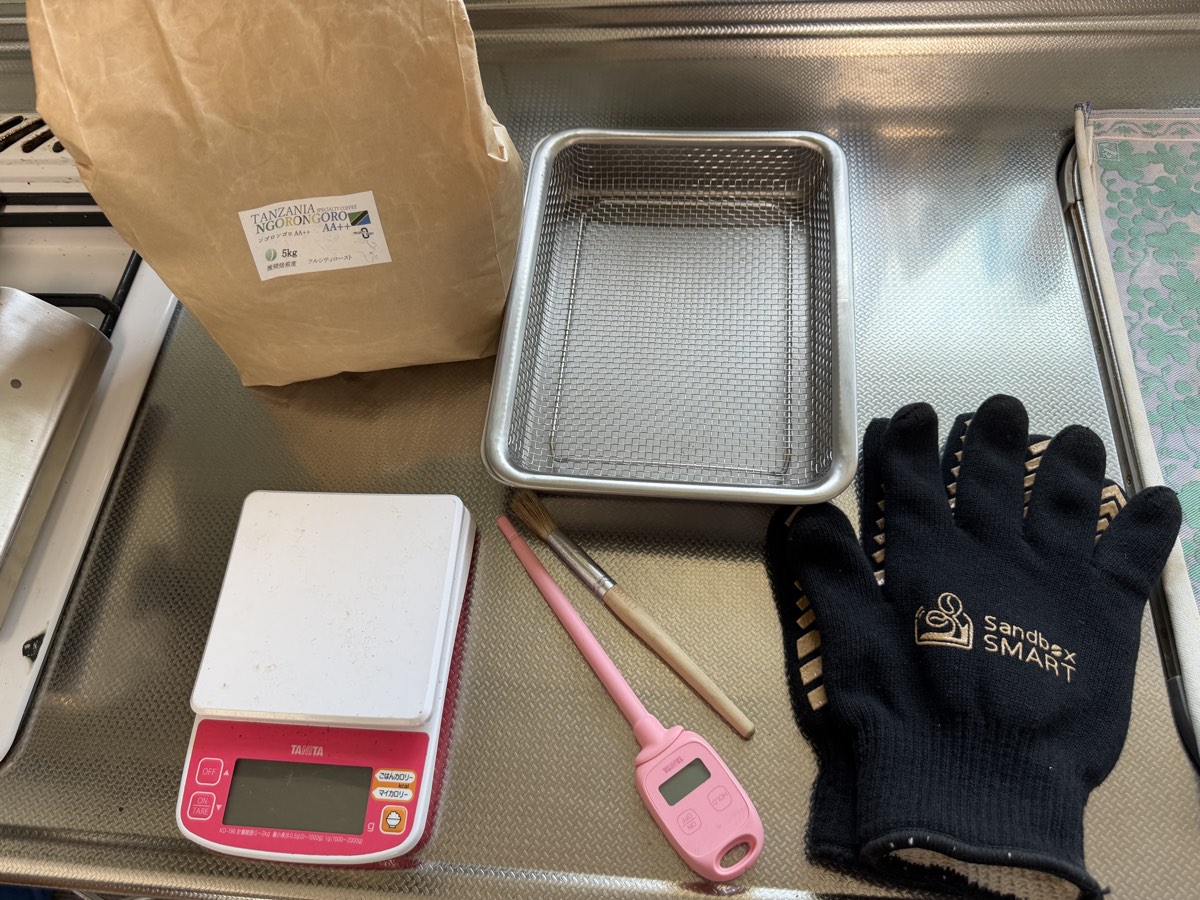
Here’s the full list of what I used.
KAKACOO KAKA-G400 Coffee Roaster A compact, direct-flame roaster with a transparent quartz-glass drum, often used by home roasters and small-batch coffee enthusiasts. The one I use is a KAKA-G400 I bought in 2025, without a smoke-exhaust fan. In 2026 I also noticed a newer version with an adjustable exhaust fan listed on Amazon; everything in this article refers to the older model I actually use.
A bean cooler (mine came with a Sandbox Smart R1) It has a fan that rapidly cools the beans and stops the roast from progressing. It costs around $70–100, but if you’re roasting larger batches (250 g or more), the beans hold heat and take a while to cool, so a cooler makes life much easier. Without one, you can spread the beans on a stainless tray or a metal sieve/colander and toss them to release heat and blow off the chaff, or point an electric fan at them. Cheaper coolers with similar specs are also widely available — searching “coffee cooler” will bring up options in any budget.
A gas stove (a portable cassette burner also works) I have roasted on both my kitchen gas stove and a portable cassette burner, using low to medium heat. Be aware that some stoves have safety sensors that can shut off the flame when used with a roaster like this. Never disable a stove’s safety features; check the instruction manuals for both the roaster and the stove you plan to use before roasting.
A thermometer I use a digital cooking thermometer I already had at home. The KAKACOO also comes with an analog thermometer, which works too. Mine reads up to around 230 °C (446 °F), which is enough for the roast range I usually aim for. The reading depends on where the thermometer is placed, so I treat it as a guide rather than an exact bean temperature.
A kitchen scale Nothing fancy needed. Even an analog one is fine.
A sieve/colander Used to separate the roasted beans from the chaff. A stainless tray or metal mesh works too.
Heat-resistant gloves The roaster and beans get hot, so I wear them just in case.
Stainless trays / mesh trays Handy for holding green or roasted beans.
A clip arm to hold the thermometer Surprisingly useful — it holds the thermometer in place so both my hands stay free. In my setup, the clip arm stayed far enough from the flame to be usable, but I still check it carefully during roasting.
A brush Handy for sweeping up chaff.
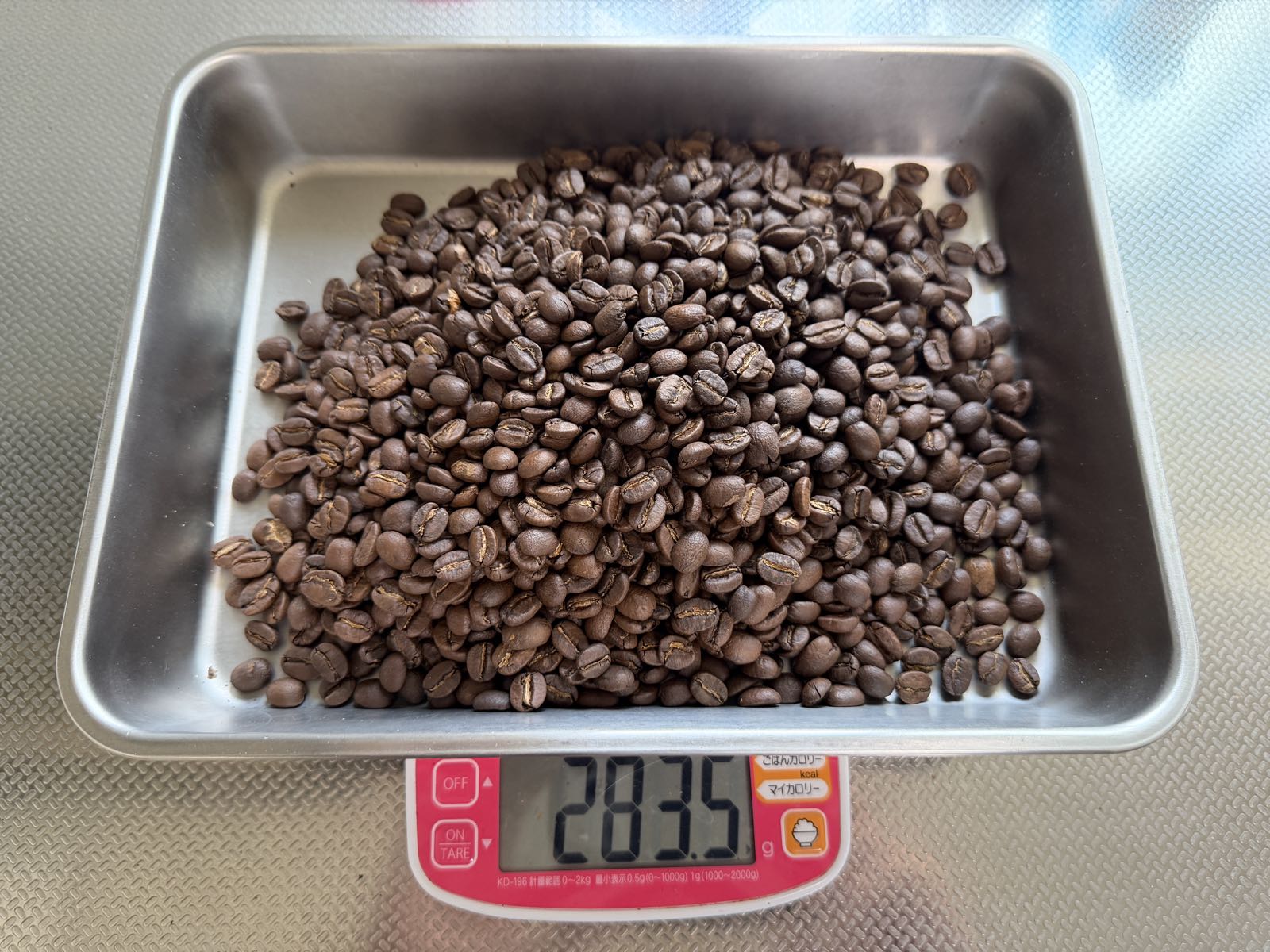
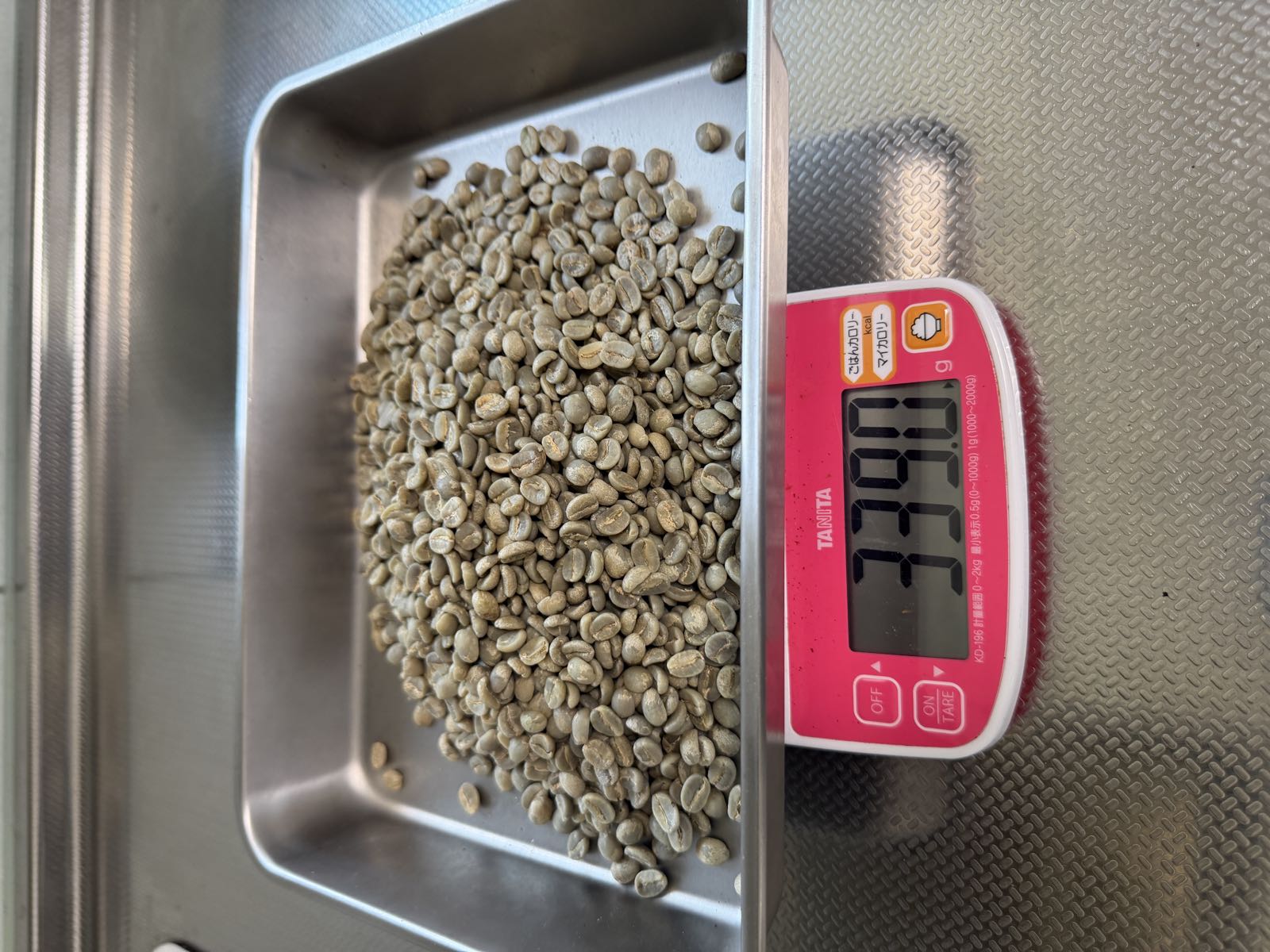
200–400 g of green beans This time I used Tanzania Ngorongoro AA and Kenya Red Mountain from a Japanese green-bean shop. Because beans lose about 15–20% of their weight during roasting, 339 g of green beans yields roughly 280–290 g roasted.
If you’re just starting out, a batch of around 200–250 g is easier to handle than filling the drum to its full 400 g capacity.
My Step-by-Step KAKACOO Roasting Process
1. Hand-pick and weigh. Sort the green beans by hand to remove defective ones, then weigh out your batch.
2. Preheat. Start the drum rotating, light the flame, and preheat. I aim to have the temperature around 180 °C (356 °F) when the beans go in — I set this because my electric roaster’s preheat was often 180 °C.
3. Add the beans. At 180 °C, add the beans. I stop the flame and rotation, hold the wooden part of the body with my left hand, tip the charging port upward, and pour the beans in from a stainless tray with my right hand. (Some people on YouTube keep the flame and rotation going and pour through a homemade charging tube.)
4. Start low. I begin on low heat and watch. I bought a Japanese coffee-roasting reference book and use one of its profiles as a guide. Depending on the bean, I adjust the heat so it reaches 180 °C (356 °F) about 10 minutes after charging — somewhere between low and medium heat.
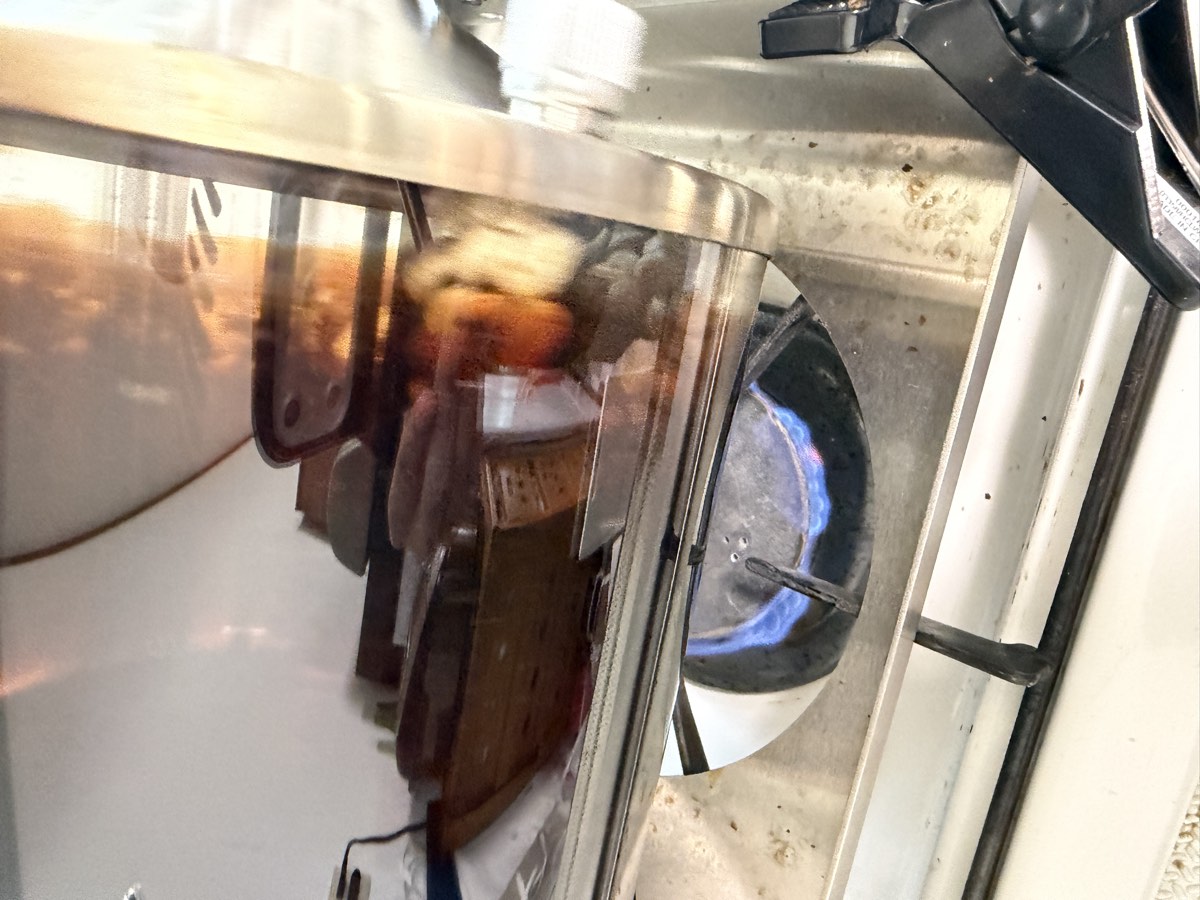
5. First crack. Again, it depends on the bean, but around 200 °C (392 °F) and about 14 minutes in, first crack begins. You hear a “pop” first, and I count it as first crack once I’ve heard three. The pops then come closer together until you get a run of loud crackling.
6. Second crack. Second crack tends to come about 2–3 minutes after first crack. It’s a finer, higher “tick-tick” or “sizzle” sound, quieter than first crack. It can be hard to catch at first, but you get used to it quickly. After the cracks, the roast progresses fast and the temperature climbs easily if you raise the heat, so I keep it low.
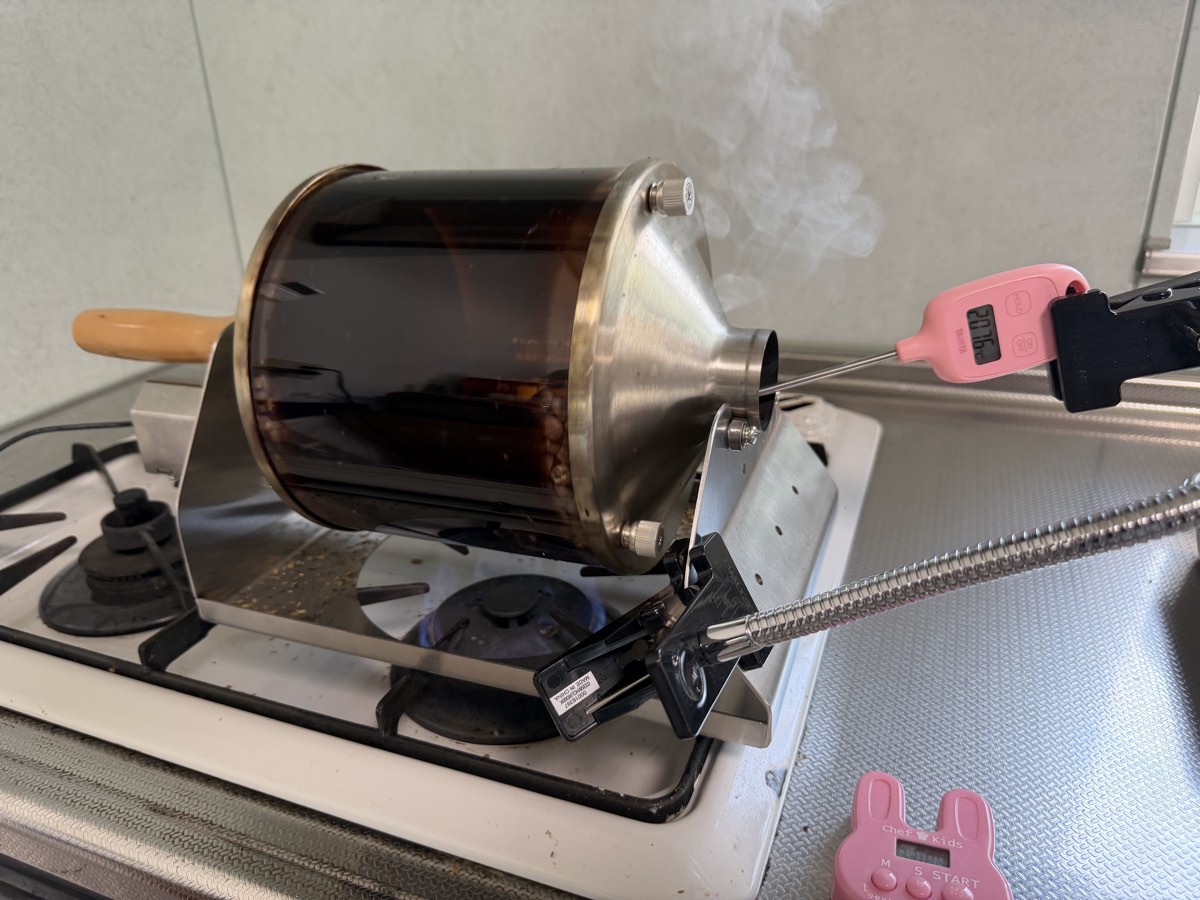
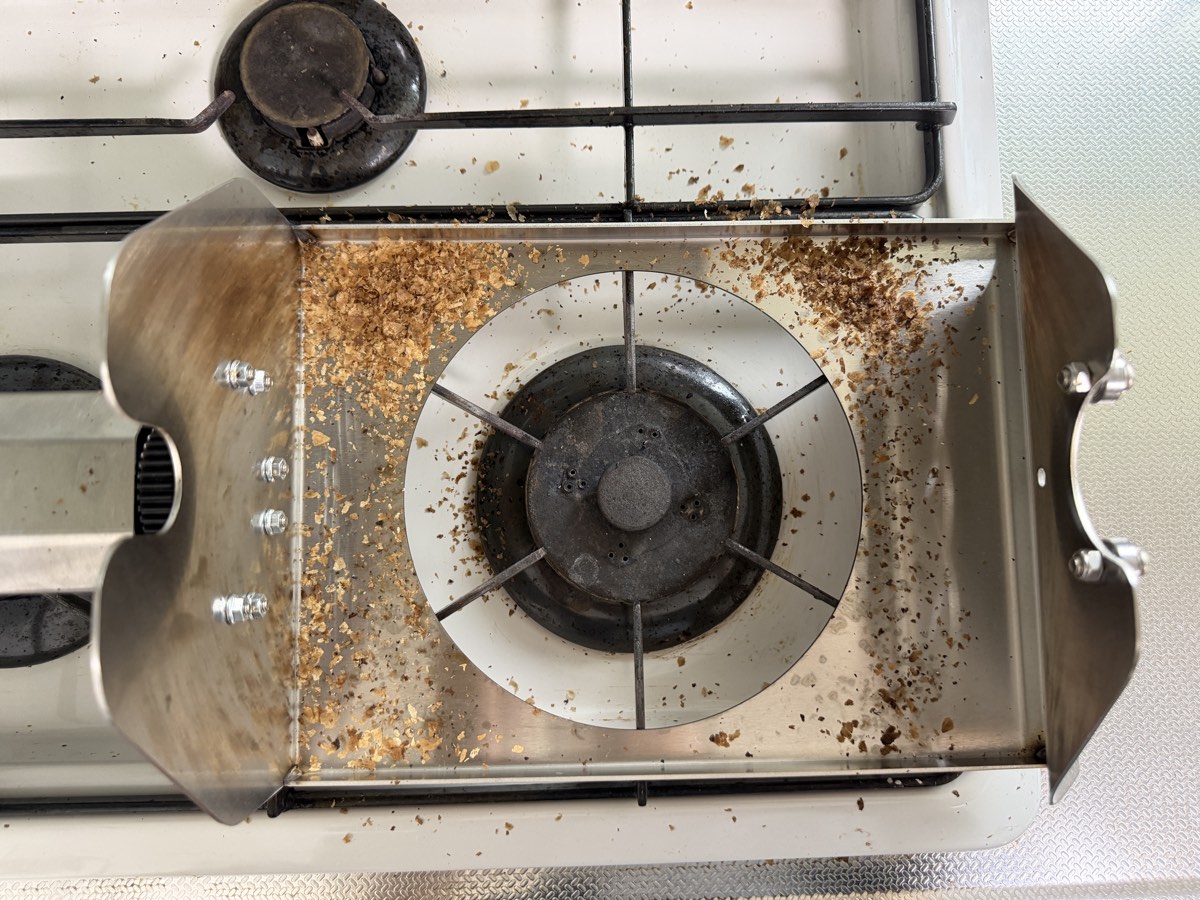
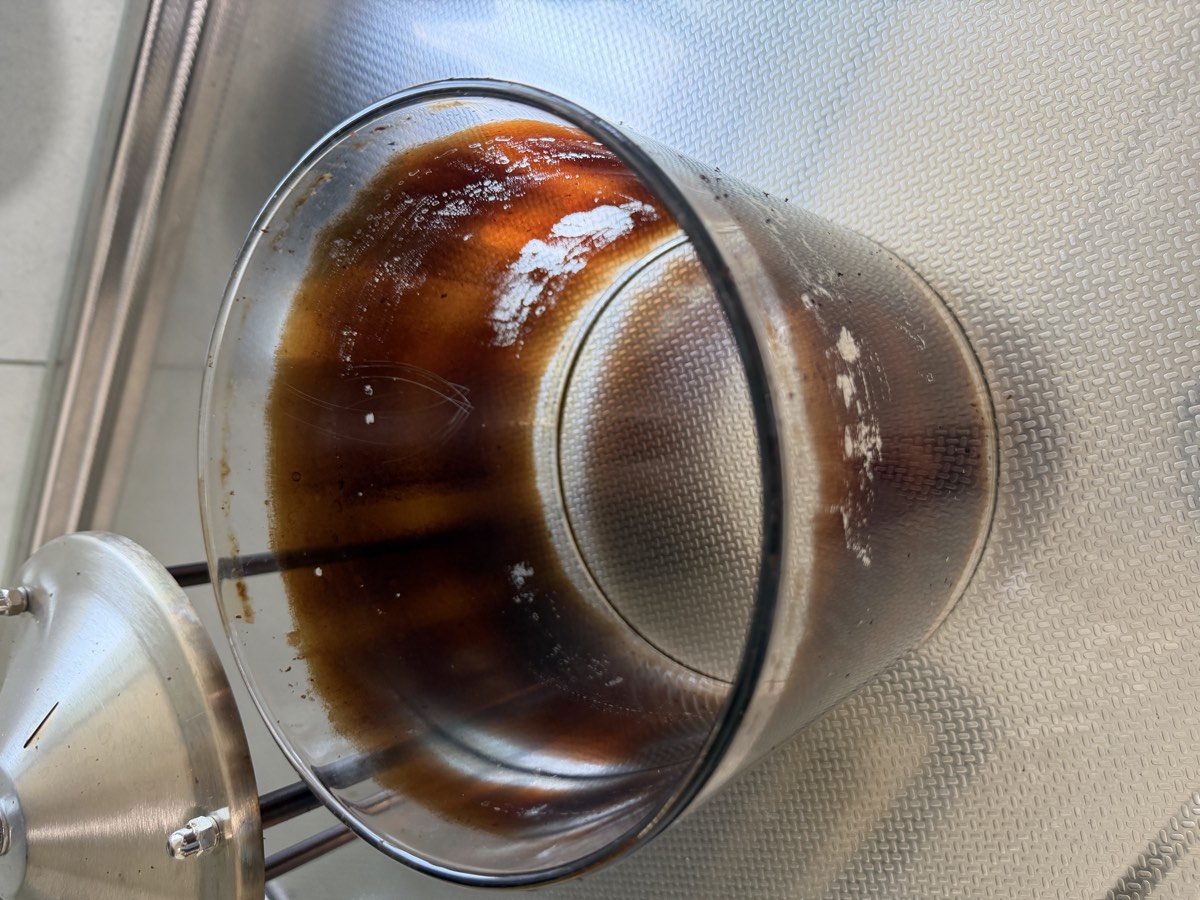
Note: with use, scorching builds up on the quartz glass. When that happens, you can slip a spoon in through the charging port to check the beans. Since the roast moves quickly after the cracks, I focus on judging when to stop.
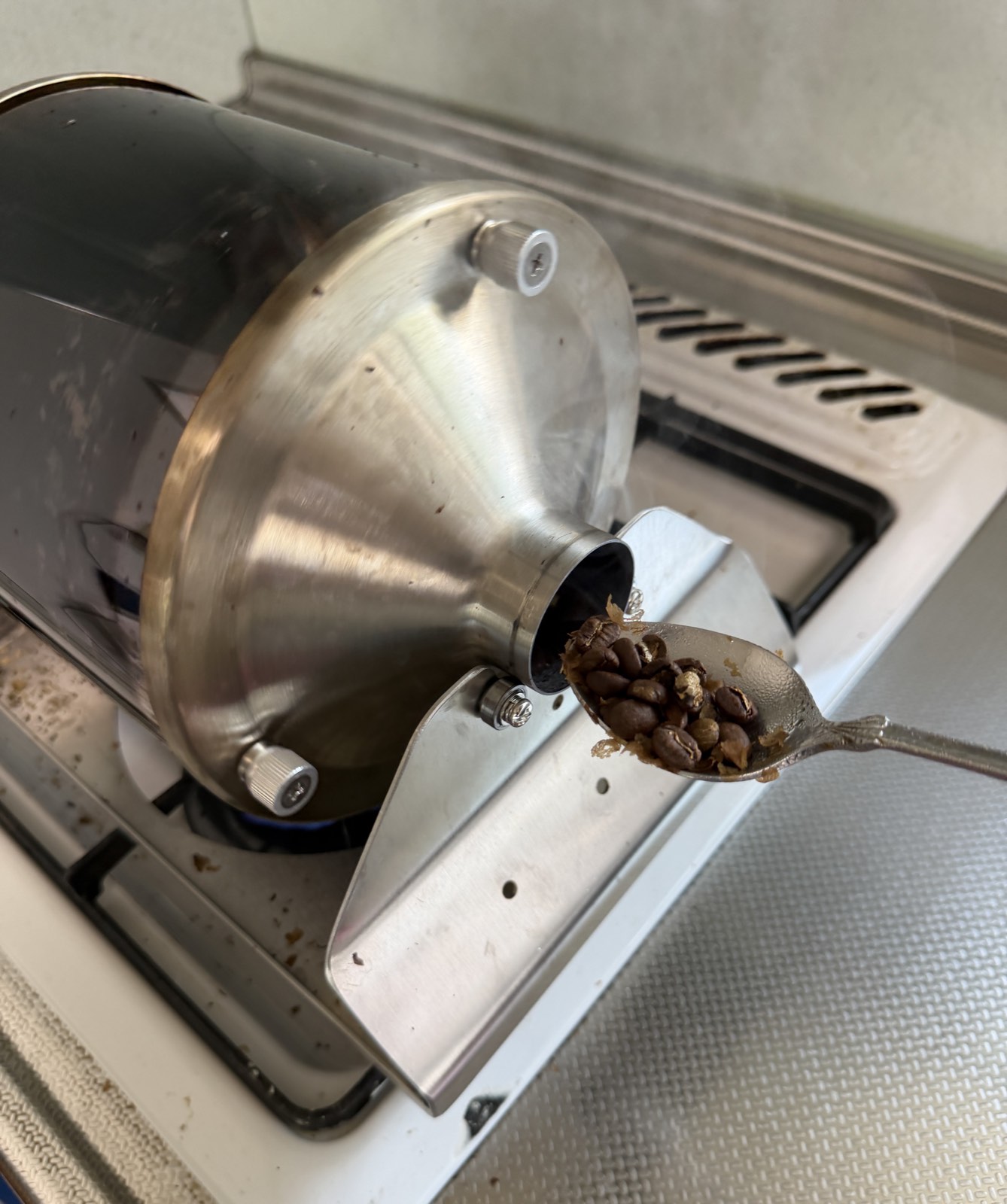
7. Drop and cool. Once it reaches the roast level I’m after, I stop the flame and rotation and immediately transfer the beans to the cooler.
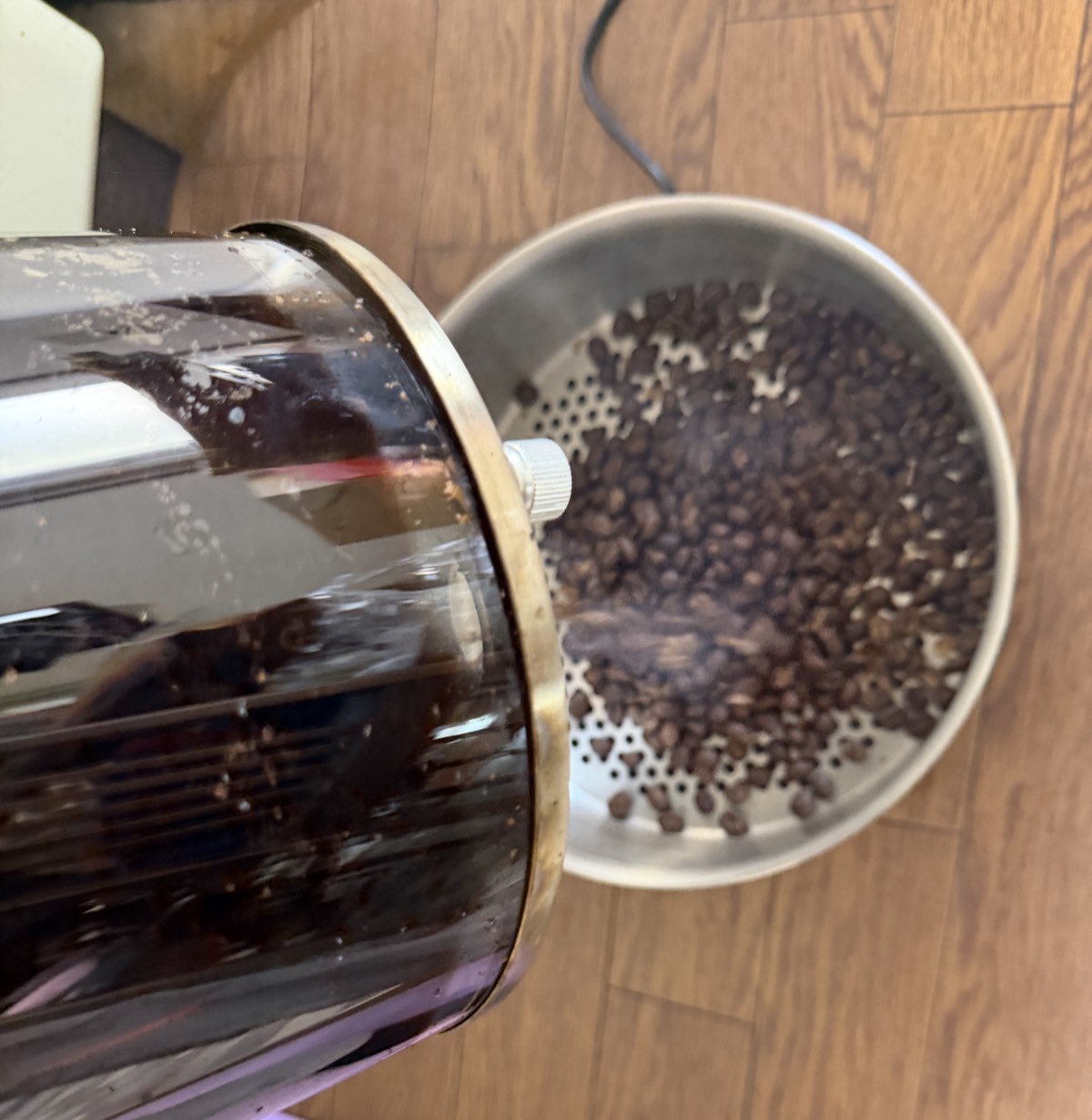
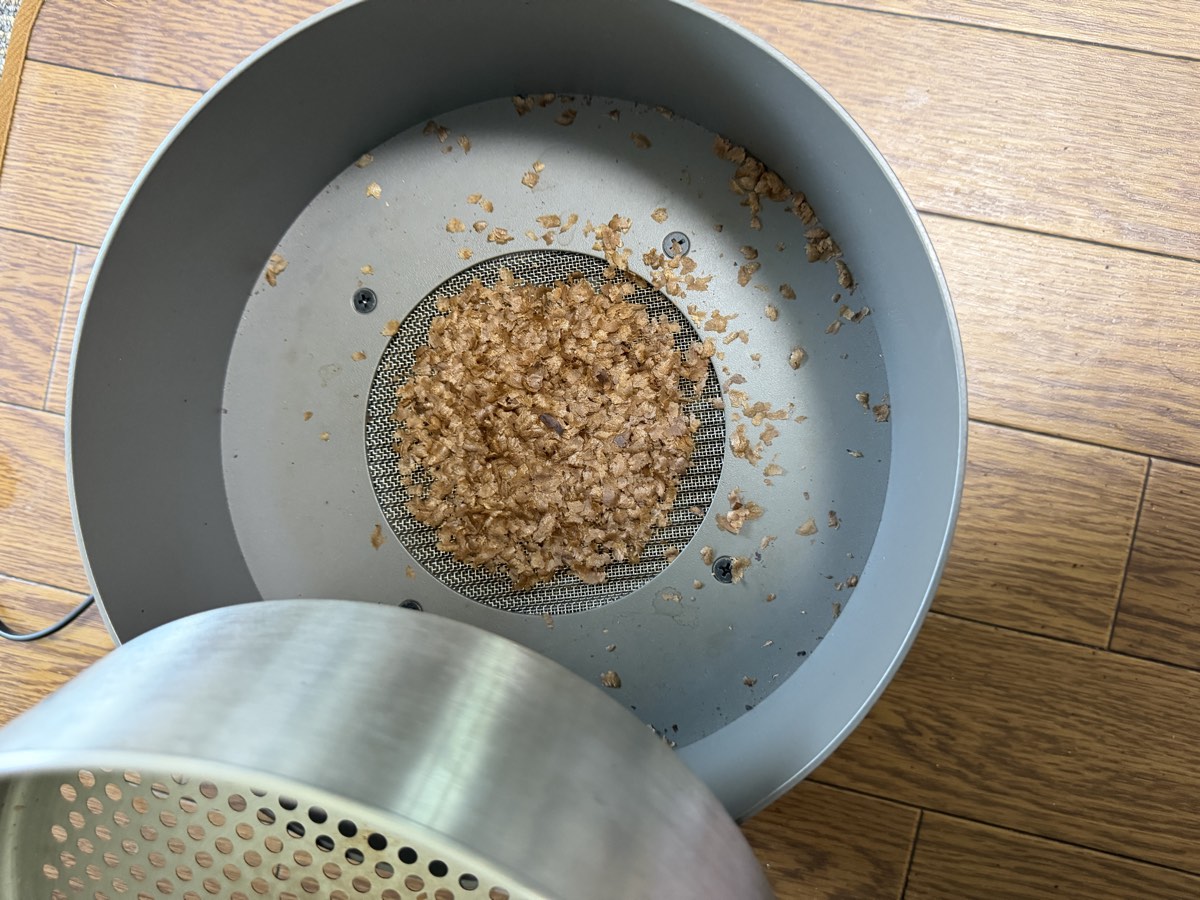
8. Cool and de-chaff. Once the beans are cool enough to touch, I toss them in a colander to blow off the chaff while they cool. The chaff scatters, so I do this outside.
Choosing Your Roast Level
Roast-level names can vary depending on the roaster, country, or reference guide, but this is the beginner-friendly guide I currently use.
| Roast level | Timing |
|---|---|
| Light | Start of first crack |
| Cinnamon | Peak of first crack |
| Medium | End of first crack |
| High | Between the end of first crack and second crack |
| City | Start of second crack |
| Full City | Peak of second crack |
| French | End of second crack |
| Italian | After second crack ends |
The recommended roast for both beans I used was Full City. But since I was sharing the roasted beans with my parents, who prefer less bitterness, I adjusted to somewhere between City and Full City. Being able to change the roast level for the person drinking it — even with the same bean — is one of the real pleasures of home roasting.
KAKACOO KAKA-G400 Pros and Cons
Pros
- Relatively affordable compared with many electric roasters; I bought mine in Japan for around ¥30,000
- The motor-driven drum makes roasting easier
- The heat-resistant glass lets you watch the beans
- A high degree of heat control gives you a real “I roasted this myself” feeling
- Roasts up to around 400 g
Cons
- More smoke and aroma than an electric roaster like the Sandbox Smart R1
- Chaff can scatter around the roasting area
- Even with ventilation, the roasting aroma can linger in the room
- Scorching builds up on the glass over time
- Less repeatable than an electronically controlled roaster
Because of the smoke and aroma, I’d recommend using the KAKACOO in a well-ventilated space.
The Finished Roast
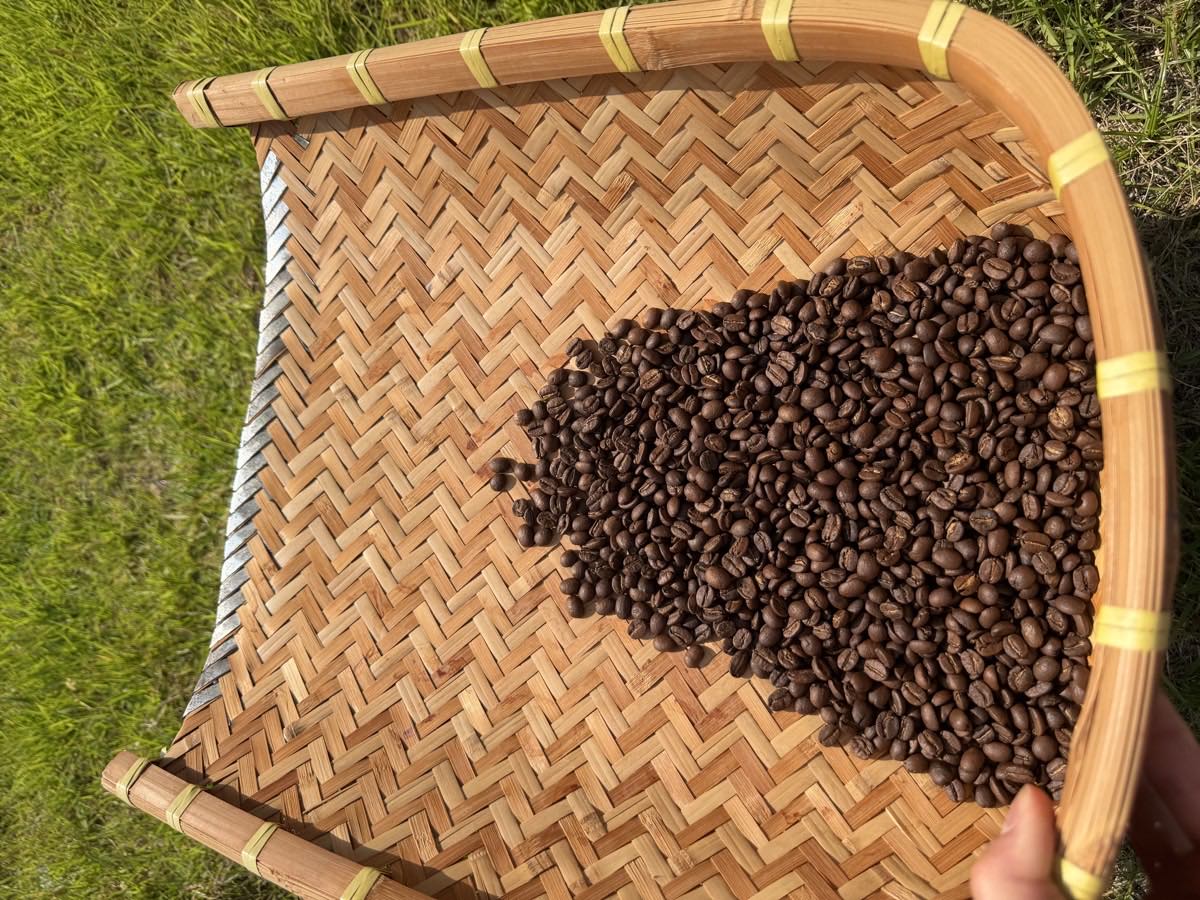
The beans expanded nicely and gave off a wonderful aroma. Even with the fan on and windows open, the whole room ended up smelling like a coffee shop.
After resting the beans for a day or two, the Kenya had a bright, fruity aroma and a clean finish, while the Tanzania felt rounder and gentler.
Wrapping Up
This was my own way of roasting with the KAKACOO. I’m still finding my way, but choosing green beans and adjusting the roast level is genuinely fun. Being able to hand my roasted beans to my parents, or give them to friends now and then, makes it all the more rewarding. Once I started roasting at home, it quickly became something I wanted to do again and again.