A Grape Aroma With No Fruit Added? PHILOCOFFEA's "708 Colombia Aroma Nativo" Blew Me Away
A review of PHILOCOFFEA's 708 Colombia Aroma Nativo PB1093, a light-roast Pink Bourbon with striking grape and lychee aromas, and a look at how fermentation-driven processing can shape coffee flavor.
Table of Contents
- What you'll learn in this article
- Introduction — A bag of beans from a friend that stopped me in my tracks
- What is PHILOCOFFEA?
- First impressions
- Hot vs. iced — I tried both
- What changed over two weeks of drinking it
- Why I first suspected it was "infused"
- Why it smells like this without any fruit added
- An honest note or two
- Brewing notes
- Final thoughts — how much processing can change a coffee
What you’ll learn in this article
- My honest impression of PHILOCOFFEA’s “708 Colombia Aroma Nativo PB1093”
- The difference between infused coffee and fermentation-driven processing
- Why this coffee smells so much like fruit without any fruit actually being added
- A hot vs. iced comparison, and how the flavor changed over two weeks of drinking it
Introduction — A bag of beans from a friend that stopped me in my tracks
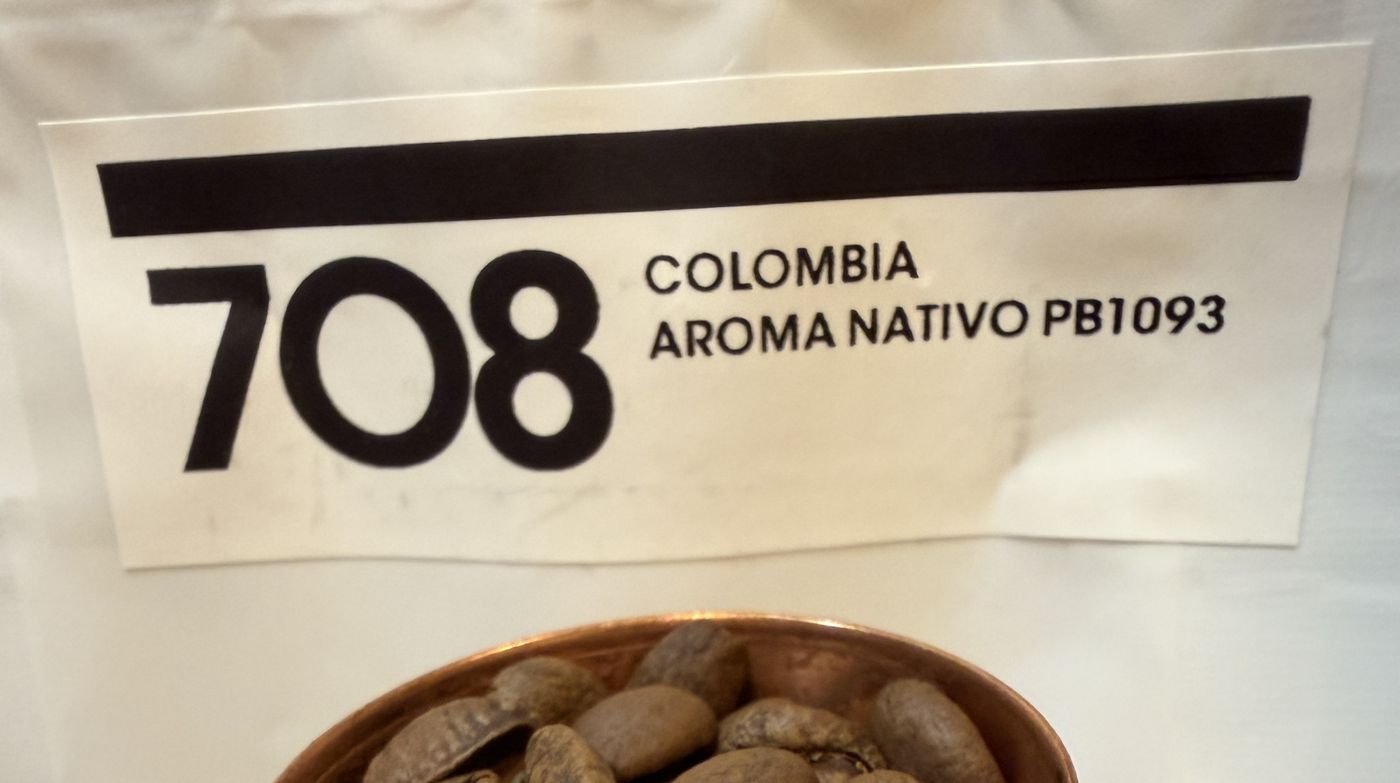
A friend gave me some coffee beans: PHILOCOFFEA’s “708 COLOMBIA AROMA NATIVO PB1093.” The moment I opened the bag, I froze.
A sweet, striking aroma of lychee and grape drifted out. It didn’t feel like opening a bag of coffee — it felt like opening a bag of fruit.
Honestly, my first thought was, “Wait, is this an infused coffee?” I’d once home-roasted an infused coffee that had passionfruit added during fermentation, and the sensation of “fruit flavor riding on top of the coffee” felt very close to what I was smelling now.
But when I looked into it, that wasn’t the case. At least according to the product description, this wasn’t a coffee flavored by adding fruit — it was a bean whose aroma had been drawn out purely through the fermentation of the coffee cherry itself. And yet, that fruit character. This article is about that surprise, and what I learned digging into “why does this taste like this?”
The short version: 708 Colombia Aroma Nativo is a light-roast coffee with an extremely strong grape and lychee aroma. It leans toward fruit character over bitterness, and I think it will really resonate with anyone who loves expressive, fermentation-forward coffees. On the other hand, if you’re looking for classic coffee bitterness and body, it might come as a bit of a shock.
What is PHILOCOFFEA?
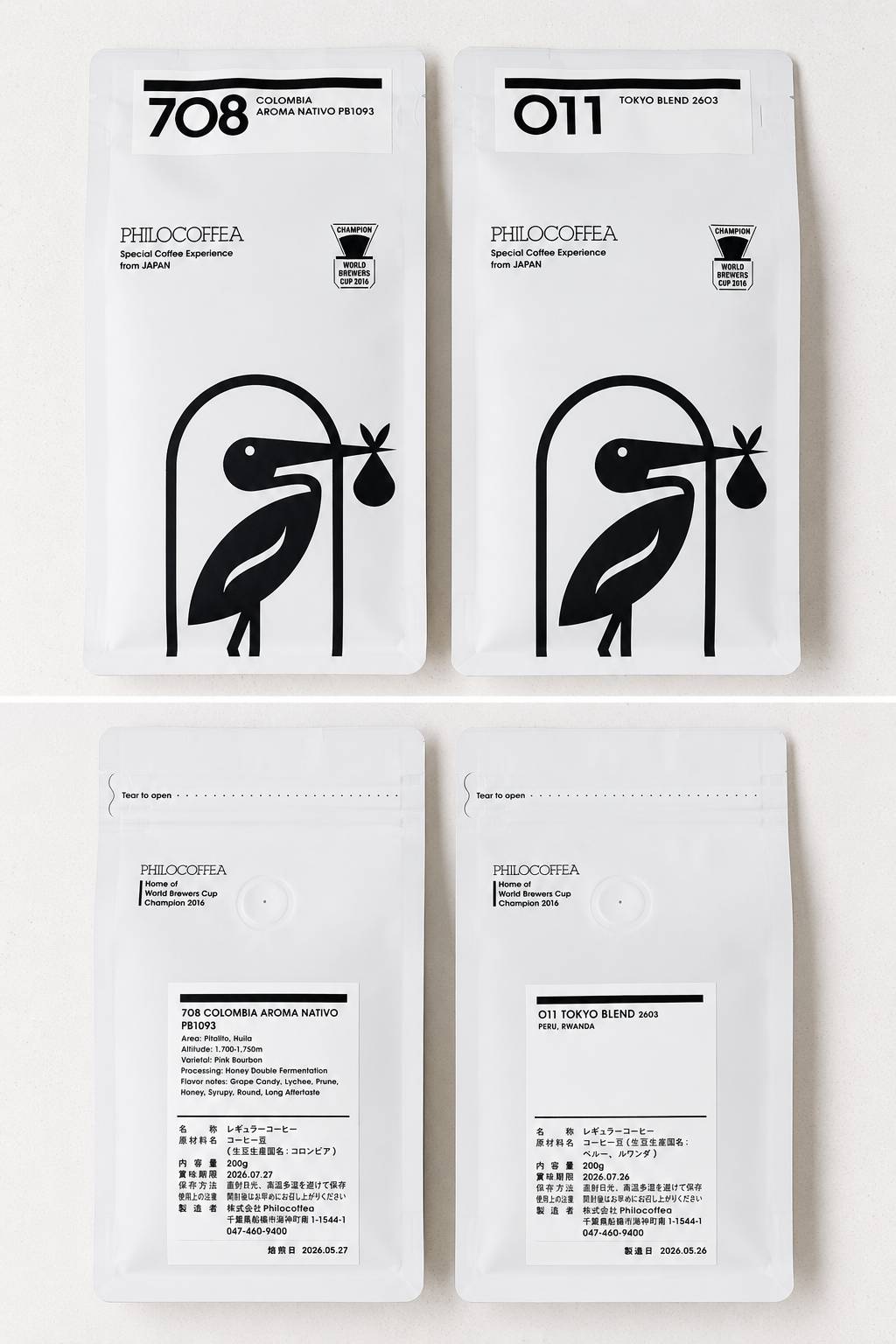
PHILOCOFFEA is a roastery based in Funabashi, Chiba, led by Tetsu Kasuya, who in 2016 became the first Asian World Brewers Cup Champion. The company handles everything in-house, from green bean selection to roasting and quality control, and is known for a “taste-first” approach to coffee making.
If you do pour-over at home, you may already know Kasuya’s own “4:6 Method.” A leaflet was included with the beans, thoughtfully introducing the brand’s origin story and a list of their shops.
First impressions
Here’s the spec sheet:
| Item | Detail |
|---|---|
| Lot name | 708 COLOMBIA AROMA NATIVO PB1093 |
| Origin | Colombia (Pitalito, Huila) |
| Altitude | 1,700–1,750 m |
| Varietal | Pink Bourbon |
| Processing | Honey Double Fermentation |
| Harvest date | October 8, 2025 |
| Roast level | Light roast |
| Flavor notes | Grape candy, Peach, Lychee, Prune, Honey, and more |
Flavor notes are as listed on the official product page.
First, the aroma. The smell when I opened the bag was incredible — that alone says a lot. Grape and lychee hit me directly, and it genuinely didn’t feel like “opening a bag of coffee.”
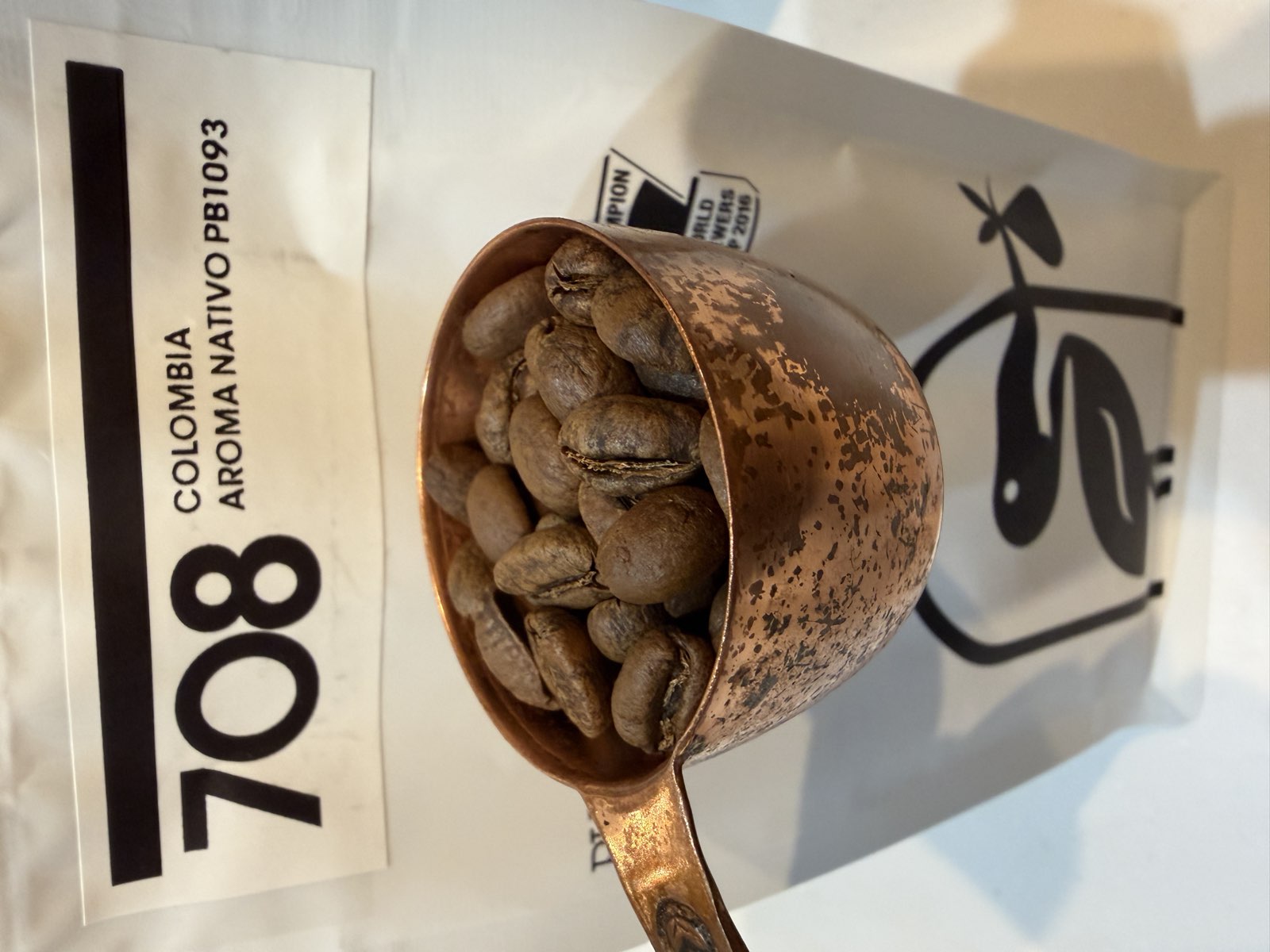
I brewed it the usual way, with a paper filter, using a method I learned at a COFFEE COUNTY class. PHILOCOFFEA recommends a HARIO Switch recipe, but I wanted to taste it honestly with a method I already know well first.
Even the medium-coarse grounds carried a fruity aroma. Once hot water hit the grounds, that sweet smell bloomed right from the bloom stage.
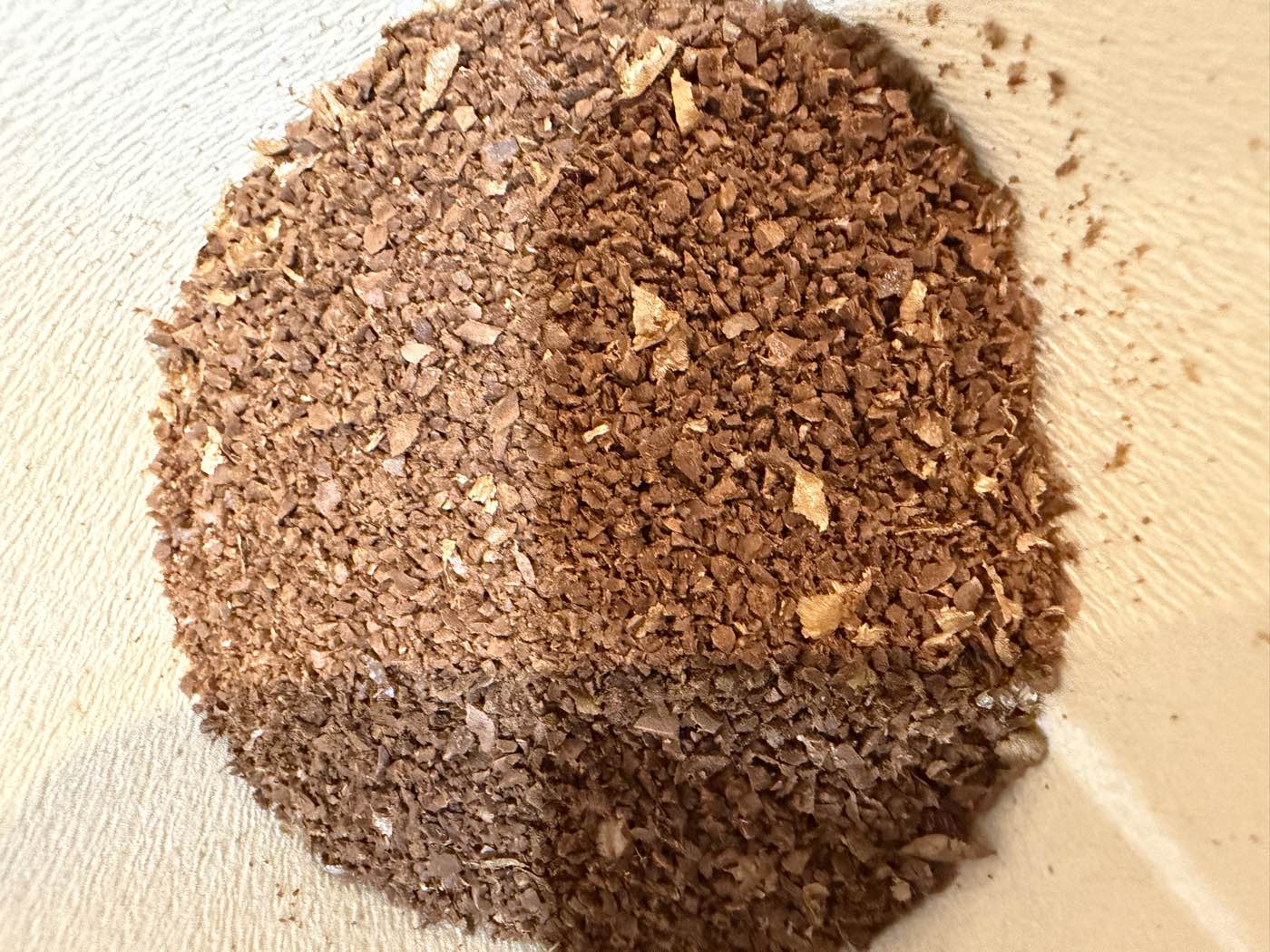
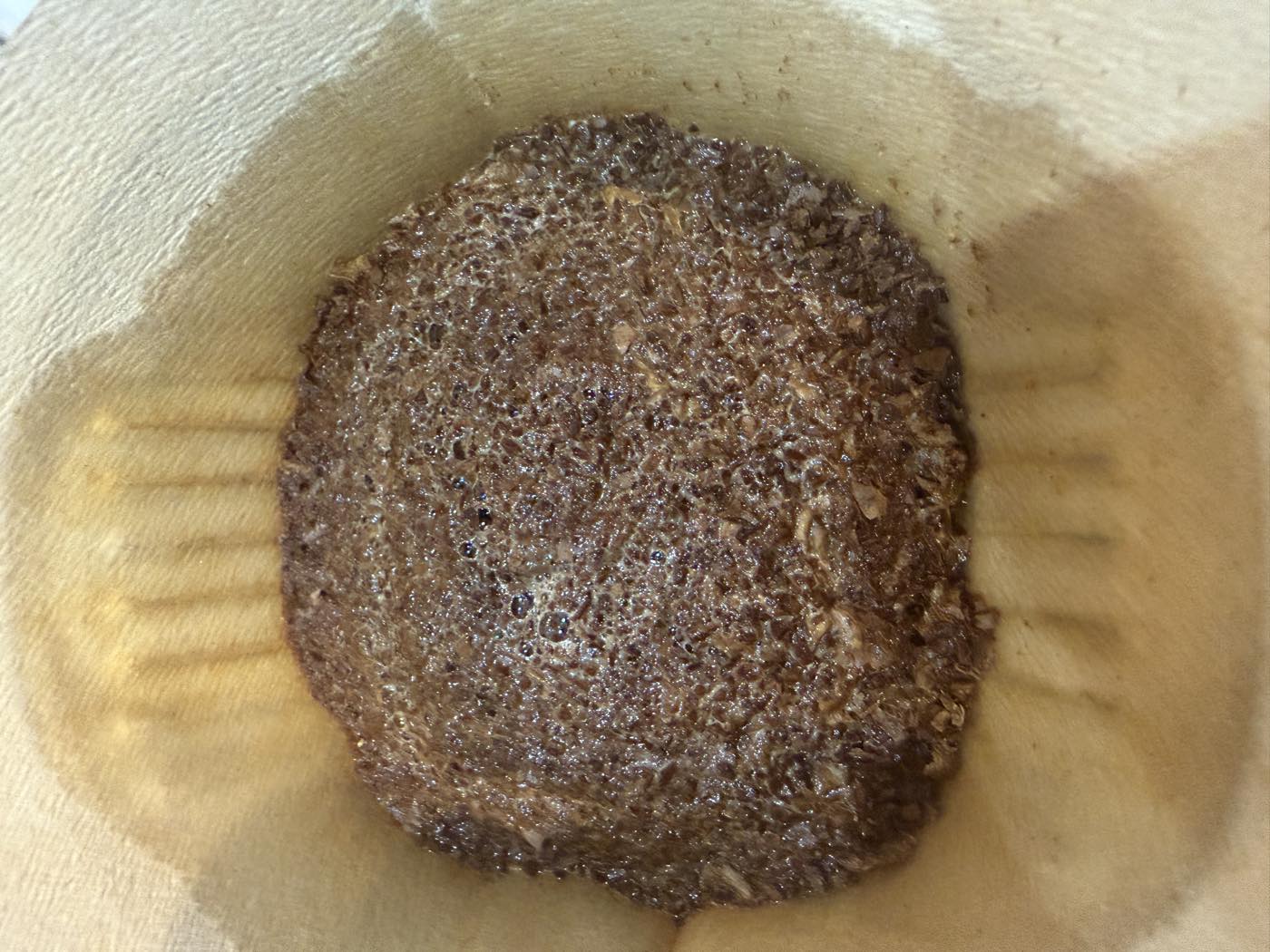
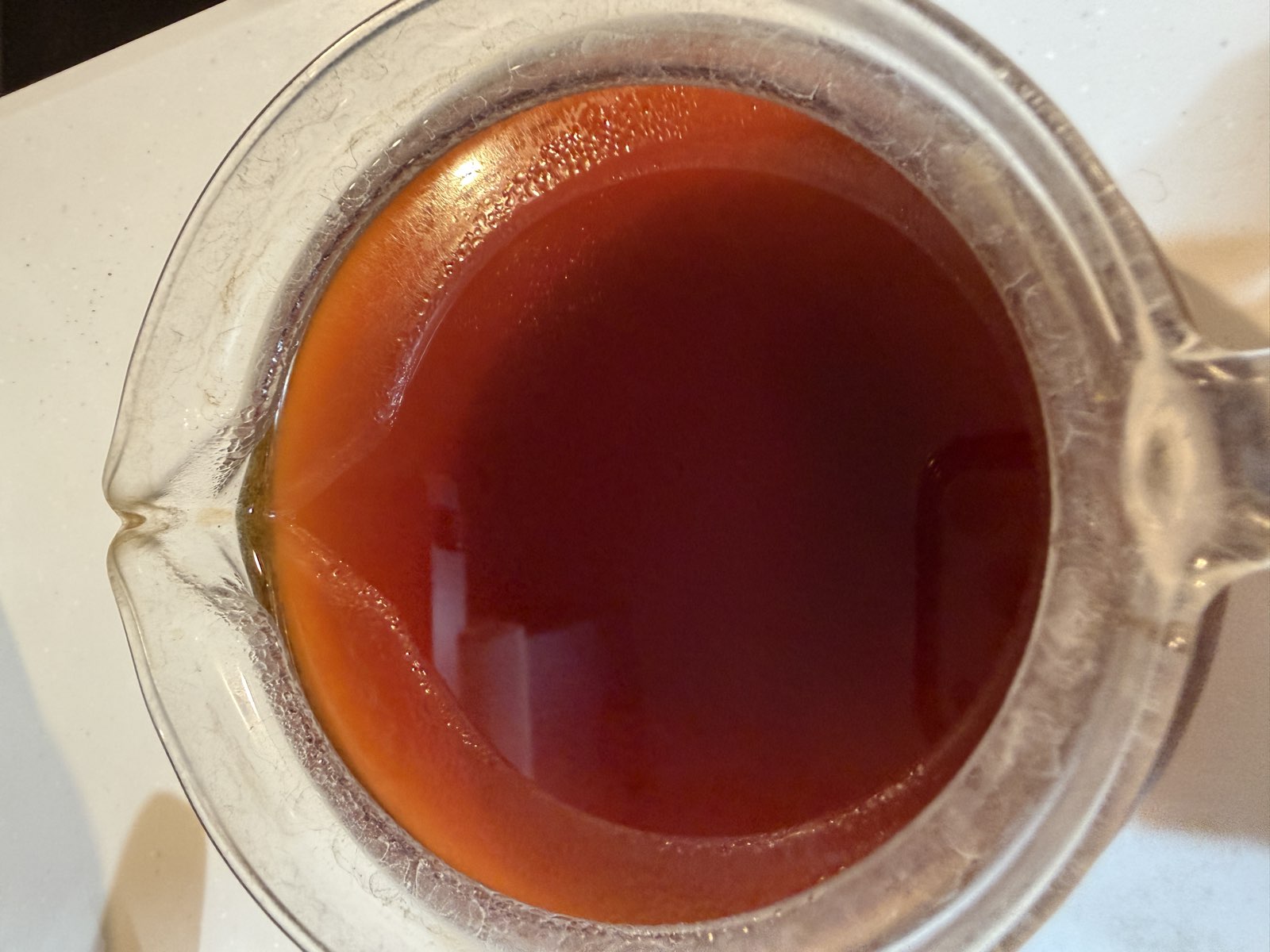
In the cup: clean acidity and sweetness, and above all, an incredibly strong fruit character. The closest description I can give is that the lychee and grape aroma is extracted directly into the cup as-is. It’s less “fresh fruit” and more like a concentrated, juice-like sweetness. The color of the brew was also a beautiful, translucent reddish-brown typical of a light roast — it already looked like tea or fruit juice before I even tasted it. I was completely won over. It’s been a while since a coffee surprised me this much through aroma alone.
Hot vs. iced — I tried both
Since I had plenty of beans, I also tried it iced.
Iced, the acidity really stood out — a very fresh, drinkable cup, perfect for a hot day. Hot, on the other hand, the sweetness came through more, and the aroma felt better balanced with the flavor. Personally, I prefer it hot. I think the “concentrated, juice-like sweetness” that makes this bean special comes through more clearly when it’s warm.
What changed over two weeks of drinking it
The roast date was May 27, 2026. I started drinking it on June 4th (day 8 after roasting) and continued for about two weeks.
PHILOCOFFEA’s official recommendation is to wait at least 15 days after roasting. In practice, the acidity and aroma felt slightly sharp early on, and gradually rounded out and came together the longer I waited. As recommended, from around day 15 onward, the sweetness, acidity, and aroma felt more integrated and easier to drink.
That said, the fruit-like aroma never faded, right down to the last cup — it was delicious every time I made it. That combination of strong character and staying power is really something. If you like light roasts, this is a bean you can enjoy watching change as it ages.
Why I first suspected it was “infused”
When the fruit flavor is this strong, it’s natural to wonder if something was added.
Coffees like that do exist — usually called “infused coffee,” where fruit or similar ingredients are actually added during the fermentation stage of processing. That said, terms like infused, co-fermented, and anaerobic are used somewhat loosely and inconsistently across different roasters and producers. Here, I’m using “infused” as a convenient shorthand specifically for coffees where fruit is added during fermentation to shape the flavor.
The coffee I’d tried before was a lot called “Passionfruit” from Cofinet in Colombia. It went through 72 hours of anaerobic fermentation with passionfruit added, an infused-honey process. I bought the green beans from Namamame Honpo — specifically their “Colombia Cofinet Passionfruit” listing — and home-roasted them myself. It had a sweet-tart tropical flavor layered on top of the coffee — a completely new coffee experience for me at the time.
My first impression of the 708 was similar: that same sense of “fruit, straight up, in the aroma.” That’s exactly why I suspected infusion at first. But as far as I could tell from PHILOCOFFEA’s product description, this wasn’t a bean flavored by adding fruit — it was one where the fermentation process itself drew out the cherry’s own natural aromas. So where does that fruit character actually come from?
Why it smells like this without any fruit added
The answer came down to rigorous quality control and a carefully designed fermentation process.
This coffee is handled by a group in Colombia called Aroma Nativo. Rather than being a farm itself, they buy coffee cherries from farms in the Huila region and process them at their own facility. The processing is led by Luis Marcelino. Based on PHILOCOFFEA’s official page, here’s how I’d summarize it in my own words:
1. Only the ripest cherries are used
Only the ripest cherries are selected, and they go through additional hand-picking on top of that — meaning only about 17% of the harvested cherry weight actually ends up as green coffee. In other words, they only use cherries at their absolute peak.
2. Lots are managed by harvest date
The lot name “PB1093” apparently represents the varietal (Pink Bourbon) and the weight of cherries harvested on that specific day. In other words, one lot equals one harvest day. This particular bean is made entirely from cherries picked on October 8, 2025. While it’s common to blend cherries from multiple farms and multiple harvest days during processing, this level of granular management by harvest date and varietal is thorough by comparison.
3. Two-stage fermentation (Honey Double Fermentation)
After an initial anaerobic fermentation, the pulp is removed, and the coffee undergoes a second fermentation in barrels while still coated in mucilage, using native microorganisms and a specially selected yeast strain to draw out flavor. It’s then dried for eight days and rests for about three months before shipping. The design extends well beyond fermentation itself, into everything that follows it.
In other words, rather than “adding” fruit, they’re pushing the coffee cherry’s own inherent potential to its limit through fermentation technique. If infusion is an approach that adds flavor from the outside, this is an approach that amplifies the cherry’s own flavor from within.
Compared with the infused coffee I had before, my honest impression is that this one felt more unified as a coffee. The fruit character and the coffee’s acidity and sweetness didn’t feel separate — they read as one finished flavor.
The full background is written in detail on PHILOCOFFEA’s product page, so if you’re curious, I’d encourage you to check it out.
An honest note or two
Since this has been pretty much nothing but praise, let me add a few honest caveats.
- As of writing, this particular bean is already sold out. And because of the “one lot, one harvest day” system, the exact same lot essentially never comes back in stock. It’s the flip side of that meticulous lot management — but it also means that if a particular lot catches your eye, the time to buy it is when you see it. You can check Aroma Nativo’s other lots and PHILOCOFFEA’s broader lineup on their official online store.
- This strong, fermentation-driven fruit character is a matter of taste. If you’re looking for classic coffee bitterness and body, this might read as too fruity. Conversely, it could be exactly the kind of coffee for someone who says “I can’t drink coffee, it’s too bitter.”
- This article does not contain any PHILOCOFFEA affiliate links. I’m simply sharing my thoughts because the beans I received from a friend genuinely impressed me.
Brewing notes
- Method: Paper filter pour-over (based on a technique I learned at a COFFEE COUNTY class)
- Grind: Medium-coarse (PHILOCOFFEA recommends a coarse grind, but I used my usual setting)
- As a light roast, I leaned toward a slightly higher water temperature to extract fully
A HARIO Switch recipe (20g beans, 300g water, 90°C, dropping to 70–80°C for the final pour only) was also included, so I’d like to try that next time and see how the same beans express differently through a different brew method. For reference, I summarized the numbers from the included recipe card in my own table below. The layout is my own; only the brewing figures are referenced.
HARIO Switch Recipe
| Item | Detail |
|---|---|
| Coffee | 20g |
| Grind | Coarse |
| Water | 300g (1:15) |
| Temperature | 90°C (70–80°C for the final pour only) |
| Time | Valve | Pour | Total |
|---|---|---|---|
| 0:00 | Closed | 40–50g | 40–50g |
| 0:40 | Open | 70–80g | 120g |
| 1:30 | Open | 80g | 200g |
| 2:10 | Closed | 100g | 300g |
| 2:45 | Open | — | — |
| 3:30 | — | Done | — |
A V60 recipe was also included, using 20g of coffee and 300g of water in five pours. I may compare both methods in a future article.
Final thoughts — how much processing can change a coffee
As someone who grows coffee trees on a farm myself, I think about cultivation almost every day. But this experience reminded me just how much the process — everything that happens between cherry and green bean — can shape the final flavor.
- Infused coffee, where fruit is added: the fun of opening up an entirely new world of flavor
- Fermentation design like Aroma Nativo’s: the sheer skill of pulling the cherry’s own fruit character out to its absolute limit
Both make you think, “wait, coffee can taste like this?” But the fact that this level of fruit character is achievable without adding any fruit at all says a lot about just how deep processing technique can go.
If you’ve ever thought “I can’t really tell the difference between coffees,” this is exactly the kind of cup I’d want you to try. It might just change how you think about coffee.